

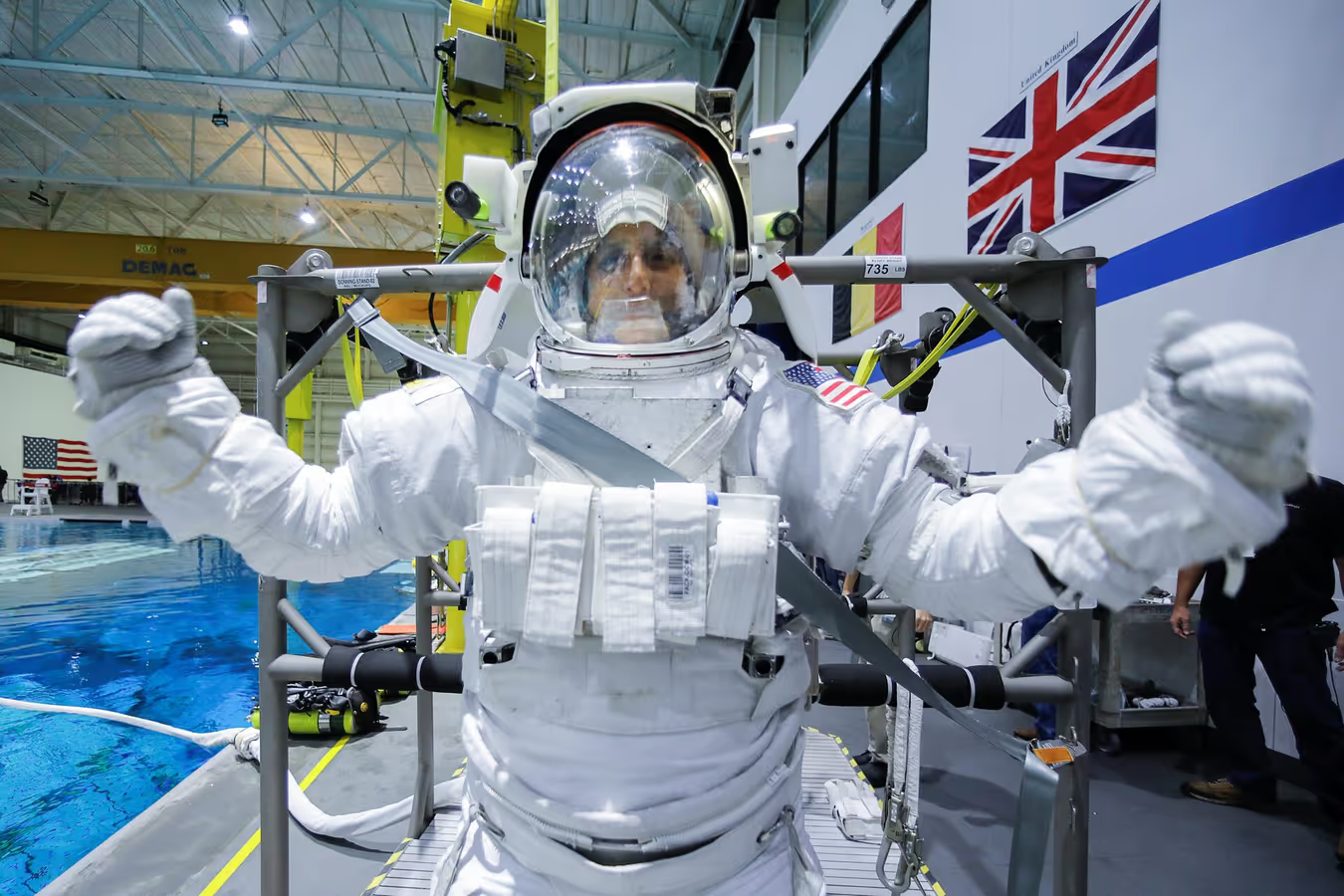
Sunita Williams‘ career in space exploration is not merely a collection of missions but a significant chapter in the ongoing saga of human spaceflight. Her contributions and experiences offer a continuum of the pioneering spirit that has characterized the entire history of space exploration.
Connecting Past Pioneers to Present Endeavors
The narrative of human spaceflight is rich with heroic figures, from Yuri Gagarin’s inaugural orbit around the Earth to Neil Armstrong’s monumental first steps on the Moon. Each of these milestones not only advanced our technical capabilities but also expanded our understanding of what humans can achieve. Sunita Williams’ journeys aboard the International Space Station (ISS) and her spacewalk records stand on the shoulders of these giants, pushing the envelope of our extraterrestrial aspirations.
Williams’ achievements echo the daring exploits of Sally Ride, the first American woman in space, and Mae Jemison, the first African-American woman in space, who both transcended societal boundaries to redefine what is possible. Like them, Williams has expanded the scope of who can aspire to reach the stars, serving as a bridge between the legends of the past and the potential of the future.
Legacy in the Context of International Cooperation
Williams’ time in space has also been marked by increasing international cooperation, a key element of modern space exploration. Her missions aboard the ISS, a collaborative project involving multiple countries, underscore the importance of global partnership in conquering space. This collaborative environment is a far cry from the competitive undertones of the early space race era, signifying a shift towards shared human goals in space exploration.
Implications for the Future of Space Exploration
Looking to the future, Williams’ legacy is intertwined with the evolving ambitions of space travel. Her work lays the groundwork for missions further into the cosmos, including planned voyages to Mars and potentially beyond. The lessons learned from her experiences will inform the training, preparation, and execution of these future missions, ensuring that the challenges of long-duration spaceflight are met with tried and tested resilience.
Technological and Humanistic Contributions
Williams’ career also highlights the dual advances in technology and human capacity. Her missions have coincided with significant technological advancements, such as the development of reusable spacecraft and more sustainable life support systems on the ISS. These technical strides mirror the humanistic growth, as astronauts learn to live and work in space for increasingly extended periods.
A Timeless Inspiration
Sunita Williams’ contributions to space exploration are a beacon of progress and a testament to the human spirit’s unyielding desire to explore and understand the universe. As we stand on the brink of new exploratory eras, her legacy serves as both a foundation and an inspiration, urging us onward to new frontiers. Williams has not only marked her place in history alongside past pioneers but has also set the stage for the future of human spaceflight, ensuring her legacy will resonate with future generations of explorers.
-Raja Aditya


