

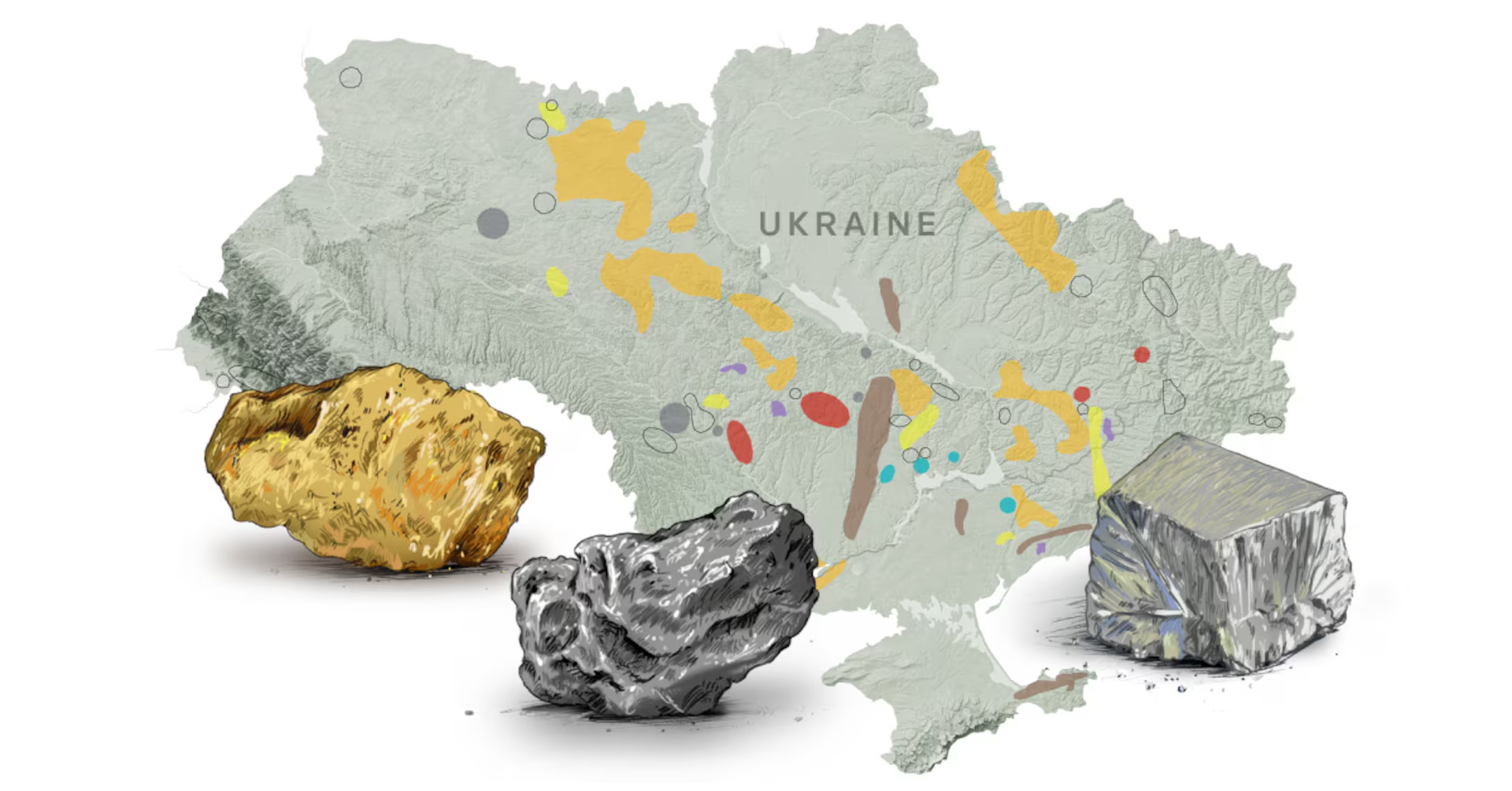
In a recent high-profile visit to the White House, Ukraine’s President Volodymyr Zelensky was expected to finalize a significant minerals deal with the United States, potentially marking a pivotal moment in his country’s future and its relationship with a major global ally. The deal, which was to solidify the U.S. stake in Ukraine’s vast mineral resources, symbolized more than just an economic partnership; it promised a form of security assurance in the turbulent geopolitical landscape of Eastern Europe.
However, the meeting took an unexpected turn. Instead of a ceremonial signing, President Zelensky found himself at the centre of a diplomatic storm. During the encounter, U.S. President Donald Trump and Vice-President JD Vance openly criticized him, demanding greater gratitude for the United States’ longstanding support. The tension reached a crescendo with Zelensky being asked to leave prematurely, resulting in the minerals deal being left unsigned—an outcome that reverberated through the corridors of power on both sides of the Atlantic. This article is aimed to delve deep into the geological bounty that Ukraine possesses.
Overview of Ukraine’s Mineral Resources
Ukraine is often called the “breadbasket of Europe” for its fertile soil, but it also sits atop a treasure trove of minerals crucial to modern technology. In fact, Ukraine holds about 5% of the world’s mineral resources, with around 20,000 identified deposits spanning 116 different minerals. Among these are significant reserves of rare earth elements and critical raw materials—from lithium and cobalt used in batteries to titanium and uranium needed in aerospace and nuclear energy. This analysis provides a detailed look at Ukraine’s mineral wealth, focusing on its major deposits of rare earths and critical materials, their technological applications, economic impact, supply chain considerations, and the sci-tech implications of a potential U.S.-Ukraine minerals partnership.
Broad Resource Base
Ukraine’s geology is remarkably diverse. It has been reported that 22 of the 34 minerals the European Union classifies as critical are found in Ukraine. These include a mix of industrial minerals, precious and base metals, and several rare earth elements. Before the 2022 invasion, about 15% of Ukraine’s 20,000 deposits were being actively mined. Even so, many resources remain untapped or under-explored, with some data still based on old Soviet-era surveys. This suggests enormous potential if modern exploration and investment are applied. Ukrainian estimates put the total value of its critical mineral reserves at over $26 trillion, underscoring how significant this repository could be to global supply chains.
Major Critical Minerals & Rare Elements
Several deposits in Ukraine stand out for their size and strategic importance:
- Graphite: Ukraine holds vast graphite reserves—roughly 20% of the world’s total resources. Graphite, used in batteries and as a high-temperature material, is abundant in central and western Ukraine. This is a huge share of a mineral critical for electric vehicle batteries and other applications, making Ukraine a key potential supplier.
- Titanium: Ukraine boasts the largest titanium reserves in Europe, about 7% of global reserves. Rich titanium-bearing sands are found in regions like Zhytomyr and Dnipropetrovsk. Ukraine is one of the few countries that mines titanium ores, feeding industries like aerospace, defense, automotive, and medicine. In fact, a major Ukrainian producer of titanium raw materials accounted for about 4% of the global titanium market before the war, placing Ukraine among the top 10 producers worldwide.
- Lithium: Often called “white gold” for the energy transition, lithium is plentiful in Ukraine. The country holds one of Europe’s largest lithium reserves, estimated around 500,000 metric tons. Confirmed lithium-bearing deposits (such as Shevchenko in Donetsk region and Polokhivske in Kirovohrad region) contain significant lithium along with companion metals like tantalum and beryllium. These deposits, if developed, could make Ukraine a major source of lithium for batteries.
- Rare Earth Elements (REEs): Ukraine’s rare earth potential is attracting attention. Ukraine has large deposits of rare earth elements including lanthanum, cerium, neodymium, yttrium, erbium, and even scandium. Cerium and lanthanum (used in catalysts, glass polishing and lighting), neodymium (used in powerful magnets), and others have been identified in at least six known deposits. One deposit, Novopoltavske, is claimed to be among the world’s largest rare earth deposits, though it would require significant investment to develop.
- Niobium and Tantalum: Often found together with rare earths, niobium and tantalum are critical for high-strength alloys and electronics. Ukraine’s resources include deposits that contain niobium—for example, the Shevchenko deposit near Pokrovsk contains lithium, tantalum, niobium, and beryllium in the same ore body. While not yet exploited, this indicates Ukraine could eventually produce niobium and tantalum as by-products of lithium mining, adding to its critical mineral portfolio.
- Cobalt and Nickel: Ukraine has started exploring for cobalt and nickel, which are essential for battery technology and alloys. Nickel and cobalt deposits have been identified in central regions like Kirovohrad and Dnipropetrovsk. These base metal deposits could become important—cobalt especially, as it is predominantly sourced from the Democratic Republic of Congo today.
- Uranium: Ukraine possesses notable uranium reserves, crucial for nuclear energy. Ukraine has some of the largest uranium reserves in Europe, mainly in the central and southeastern regions. The country mined uranium for its own nuclear power plants in the past, although it still imports some fuel. Expanding domestic uranium production could bolster both Ukraine’s energy security and supply global markets.
- Manganese, Iron and Others: In addition to the above high-tech minerals, Ukraine is traditionally rich in manganese and iron ore. It has some of the world’s largest manganese reserves, critical for steelmaking. Prior to the war, Ukraine was the world’s 8th largest manganese producer and a major supplier of iron ore and steel to Europe. While these are not “rare” elements, they are essential for infrastructure and the emerging field of green steel. Ukraine also ranks in the top ten globally for production of minerals like zirconium, kaolin (china clay), magnesium, peat, and bromine. Many of these have specialized uses.
In sum, Ukraine’s mineral endowment is remarkably broad. It ranges from common bulk metals to highly strategic rarities. This diversity of critical raw materials—lithium, cobalt, graphite, rare earths, titanium, uranium, and more—makes Ukraine a potential powerhouse in the critical materials supply chain. Few countries outside China possess such a spectrum of critical minerals in significant quantities. If even a portion of these resources is developed, Ukraine could emerge as a key supplier in global markets for decades to come.
GV Ramana Rao


