

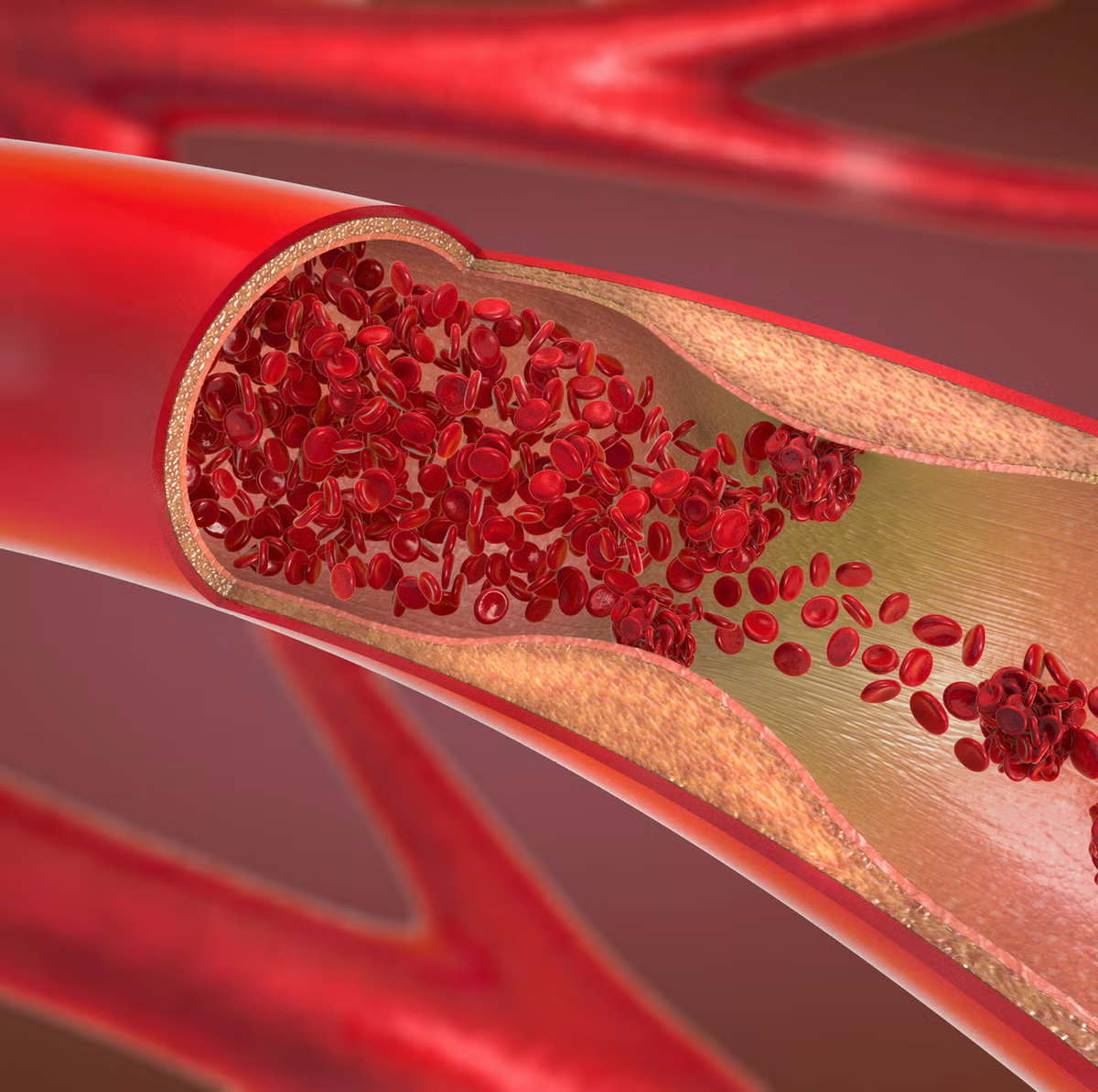
Recent advancements in medical research have brought to light the development of a novel artificial nanozyme that could revolutionize the treatment of conditions associated with excessive blood clotting, such as pulmonary thromboembolism (PTE) and ischemic stroke. These breakthroughs come from researchers at the Indian Institute of Science (IISc) in Bengaluru, who are making strides toward addressing a critical challenge in cardiovascular health.
Under normal physiological conditions, platelets, a type of specialized blood cell, are activated in response to injury in blood vessels. This activation leads to platelet aggregation, forming protective blood clots in a process known as haemostasis. However, in certain conditions, including PTE and complications from diseases like COVID-19, the body can respond abnormally. Increased oxidative stress and elevated levels of reactive oxygen species (ROS) can trigger excessive platelet activation, leading to harmful clot formation and serious complications.
Researchers at IISc have developed a metal-based nanozyme that mimics the action of natural antioxidant enzymes. Known as vanadium pentoxide (V2O5) nanozymes, these innovative materials are designed to mitigate oxidative stress by reducing ROS levels in the bloodstream. The newly synthesized nanozymes have shown the ability to prevent the over-activation of platelets, thus potentially reducing the risk of thrombosis—an underlying cause of significant morbidity and mortality.
The researchers synthesized various redox active nanomaterials through controlled chemical reactions involving small building blocks. By isolating human platelets and activating them with physiological agonists, the team tested the efficiency of these nanozymes in preventing excess platelet aggregation. Among the different shapes and sizes of nanozymes tested, the spherical V2O5 nanozymes emerged as the most effective in mimicking the function of the natural enzyme glutathione peroxidase.
In their experiments, the team injected the nanozyme into a mouse model simulating PTE. The results were promising: the injection significantly reduced thrombosis and increased survival rates among the test subjects. Notably, the team monitored the animals for up to five days post-injection, without observing any toxic effects, indicating the potential safety of these nanozymes for future therapeutic applications.
-Raja Aditya


