

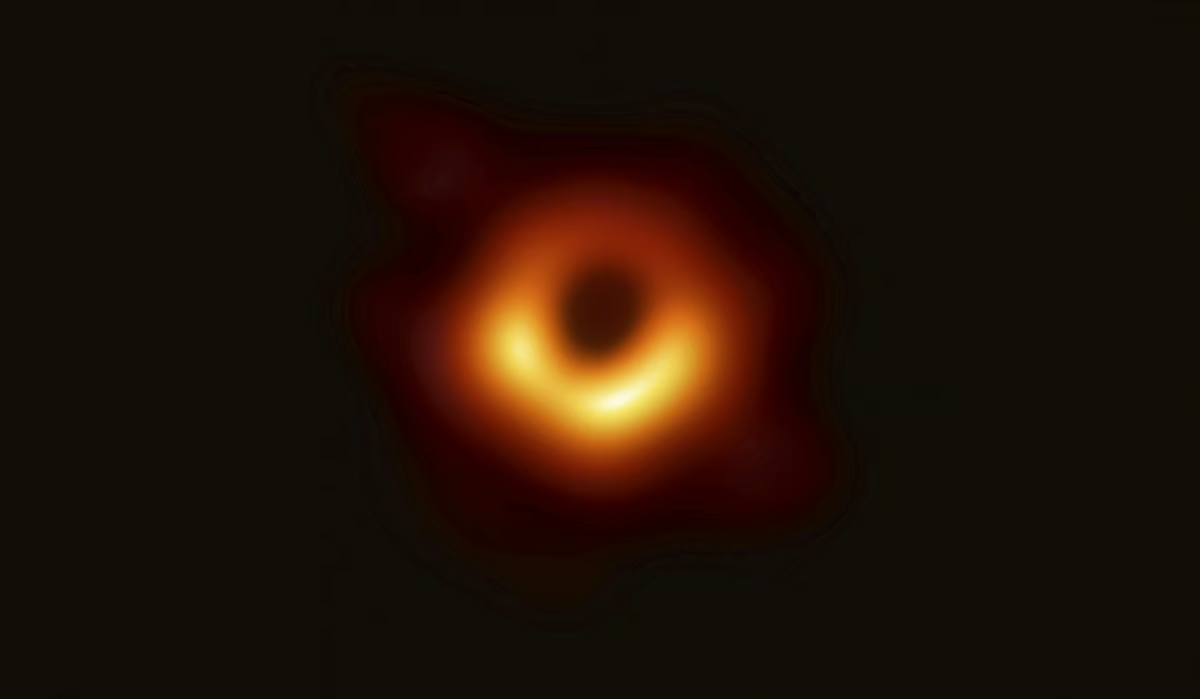
Scientists from the Indian Space Research Organisation (ISRO) have announced exciting new findings about a black hole known as GRS 1915+105. This black hole is located about 28,000 light-years away from Earth and is famous for its strange behavior.
Since its launch in 2015, India’s first dedicated multi-wavelength observatory, AstroSat, has been studying GRS 1915+105. Researchers have been monitoring its X-ray emissions, which change dramatically over time. They found that the brightness of the black hole alternates between low and high. Each phase lasts for a few hundred seconds.
During periods of high brightness, scientists observed rapid flickers in the X-rays. These flickers, called Quasi-periodic Oscillations (QPOs), happen at a remarkable frequency of about 70 times per second. However, these fast flickers disappear when the brightness drops.
The research team discovered that these flickers are related to a cloud of hot plasma surrounding the black hole, known as the corona. When the corona gets hotter and more compact, the fast flickers become more visible. But when it expands and cools off, the flickers vanish.
\The team’s report highlights the complex interactions happening around the black hole. They believe that understanding these patterns can offer insights into the extreme conditions near black holes, where gravity is incredibly strong.
“GRS 1915+105 acts like a cosmic laboratory,” said Anju Nandi, one of the researchers. She emphasized the importance of these findings in helping scientists learn more about black holes and the mysteries they hold.
The study has been published in the Monthly Notices of the Royal Astronomical Society, showcasing the remarkable contributions of Indian scientists in this field.
As researchers continue to study GRS 1915+105, they hope to uncover more about the universe’s most enigmatic phenomena, helping us understand the life cycles of stars and the nature of black holes.
-Rashmi Kumari


