

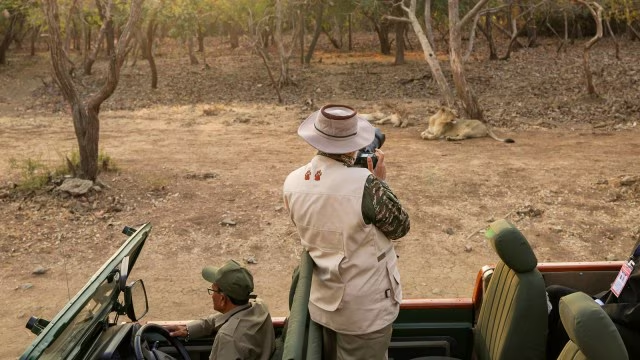
In a significant step for wildlife conservation, Prime Minister Narendra Modi has announced plans to expand Project Cheetah into two new areas: Gandhisagar Sanctuary in Madhya Pradesh and Banni Grasslands in Gujarat. This announcement came during his first meeting with the National Board for Wildlife (NBWL) at the Gir National Park in Junagadh district, coinciding with World Wildlife Day celebrations.
The Prime Minister highlighted the need for a concerted effort to protect and manage India’s wildlife, particularly in light of dwindling populations of several species. As part of the broader conservation strategy, Modi launched an Asiatic Lion population estimation exercise, which will begin in May. This important survey is conducted every five years, with the last one completed in 2020. The government aims to increase the range of Asiatic Lions throughout the Saurashtra region.
In addition to the cheetah and lion initiatives, the government has also pledged a substantial budget of Rs 2,900 crore for Project Lion over the next decade. There are new plans to establish a National Great Indian Bustard Conservation Plan and strategies for conserving tigers outside of protected reserves. The endangered gharial population is also a focal point; Modi announced a specific project aimed at their conservation.
The meeting also addressed the growing issue of human-wildlife conflict, with plans to create a Centre of Excellence dedicated to managing these challenges. This center will assist states in equipping rapid response teams with advanced technology to monitor and address conflicts effectively.
During his visit, Modi laid the foundation stone for the National Referral Centre for Wildlife in Junagadh. This facility will play a crucial role in wildlife health and disease management, ensuring that wildlife conservation efforts are well-coordinated and effective.
The Prime Minister stressed the importance of community involvement in wildlife conservation, pointing out that local communities, including the Maldharis, have been essential in the successful conservation of lions. He emphasized that protecting wildlife should not be the sole responsibility of the government; rather, local populations should actively participate in these efforts.
Using modern technologies such as remote sensing and artificial intelligence will also feature prominently in upcoming conservation strategies. This will enhance the government’s ability to monitor and manage forest fires and human-animal conflicts more effectively.
As India has taken a leadership role in global wildlife conservation initiatives, Modi’s announcements reinforce the government’s commitment to protecting its rich biodiversity, ensuring that future generations can enjoy a thriving natural heritage.


